


MENU

Horseback Archery

A Mongolian Heritage
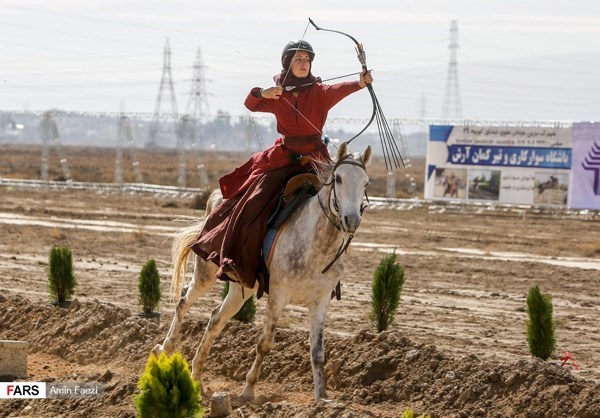
International horseback archery championship in Shiraz, Iran. 25 November 2018. Image from Fars Media Corporation, via Wikimedia Commons.

In the late 12th century, a young Mongolian warrior named Temüjin united the nomadic tribes of the Mongolian steppe. In 1206, Temüjin was declared the ruler of all Mongols and assumed the title of Genghis Khan (c. 1162-1227). Under Genghis Khan’s leadership, the Mongols began a campaign to conquer Central Asia. It was an audacious endeavor that would usher in one of the mightiest empires in the world, the Mongolian Empire, which at its height in the 13th century, became the largest contiguous empire in history, extending from the Sea of Japan to Eastern Europe.

Other than the fierceness of the Mongolian warriors themselves, an important reason for the unprecedented military success of the Mongolian troops, was the extensive use of a cavalry of mounted archers. The origins of mounted archery can be traced to antiquity with the Egyptians firing arrows from chariots but its strategic importance on the battlefield flourished with the Mongols.

Without being burdened by the heavy armor of traditional foot soldiers, a light and nimble cavalry of archers could be mobilized and fielded quickly. The speed of the horses and the accuracy of the archers had a devastating effect on the enemy and proved to be a key factor in the military success of the Mongols.

The Mongolian cavalry honed their style of warfare to an art. Galloping at full speed, the rider could let go of the reigns, place an arrow in the bow, and hit a target with deadly accuracy from as far as 300 meters away. The bows were slim and could be handled easily, and the archers used a “thumb draw,” which allowed them to load and fire arrows in rapid succession. Typically, they carried two bows, a longer one for hitting distant targets, and a shorter one for close combat, capable of penetrating armor. They also used double-tipped arrows that could be lit on fire. Peculiar to Mongolian archery was the use of “whistling arrows,” arrows with holes in the tip that would make a whistling sound in flight, a haunting siren meant to intimidate the enemy. Interestingly, horseback archery was not the sole domain of men. Women were also trained as mounted archers and often took part in combat alongside the men.

With the development of gunpowder and the proliferation of firearms, mounted archery’s strategic importance on the battlefield began to wane and eventually came to an end. Horseback archery as a weapon of war has receded into history but the practice of hitting targets using a bow and arrow while galloping on horseback remains strong.

Mounted archery as a sport also has a long history. In Mongolia, it is part of a traditional festival called Naadam. Dating back to the times of Genghis Khan, Naadam started as a tournament to keep warriors in shape and included horse racing, wrestling and archery. In recent years, mounted archery is undergoing a renaissance and has emerged as a popular competition that has moved beyond the borders of Mongolia and onto the international scene. It is a sport practiced by both men and women that requires long and strenuous training. The archer must be in complete harmony with the horse, where the motion of the gallop becomes an integral part of the shot. The archer performs most of the mechanics of the sport, controlling the horse, taking the arrow from the quiver, and placing it in the bow, without taking eyes off the target. And everything unfolds at a furious pace with the archer having only one or two seconds to fire each shot.

Festivals and competitions that feature mounted archery span much of Asia, from Japan to Indonesia to Iran, and are making inroads and gaining popularity in Europe. As the keen-eyed archer, galloping at full speed and leaning at an improbably angle, pulls the bow and releases the arrow towards the target, one can almost hear the whistle of the arrows that struck terror into the hearts of the Mongols’ enemies.


SASSAN TABATABAI is the Guest Editor of Mizan Pop


Horseback Archery

A Mongolian Heritage

In the late 12th century, a young Mongolian warrior named Temüjin united the nomadic tribes of the Mongolian steppe. In 1206, Temüjin was declared the ruler of all Mongols and assumed the title of Genghis Khan (c. 1162-1227). Under Genghis Khan’s leadership, the Mongols began a campaign to conquer Central Asia. It was an audacious endeavor that would usher in one of the mightiest empires in the world, the Mongolian Empire, which at its height in the 13th century, became the largest contiguous empire in history, extending from the Sea of Japan to Eastern Europe.

Other than the fierceness of the Mongolian warriors themselves, an important reason for the unprecedented military success of the Mongolian troops, was the extensive use of a cavalry of mounted archers. The origins of mounted archery can be traced to antiquity with the Egyptians firing arrows from chariots but its strategic importance on the battlefield flourished with the Mongols.

Without being burdened by the heavy armor of traditional foot soldiers, a light and nimble cavalry of archers could be mobilized and fielded quickly. The speed of the horses and the accuracy of the archers had a devastating effect on the enemy and proved to be a key factor in the military success of the Mongols.

The Mongolian cavalry honed their style of warfare to an art. Galloping at full speed, the rider could let go of the reigns, place an arrow in the bow, and hit a target with deadly accuracy from as far as 300 meters away. The bows were slim and could be handled easily, and the archers used a “thumb draw,” which allowed them to load and fire arrows in rapid succession. Typically, they carried two bows, a longer one for hitting distant targets, and a shorter one for close combat, capable of penetrating armor. They also used double-tipped arrows that could be lit on fire. Peculiar to Mongolian archery was the use of “whistling arrows,” arrows with holes in the tip that would make a whistling sound in flight, a haunting siren meant to intimidate the enemy. Interestingly, horseback archery was not the sole domain of men. Women were also trained as mounted archers and often took part in combat alongside the men.

With the development of gunpowder and the proliferation of firearms, mounted archery’s strategic importance on the battlefield began to wane and eventually came to an end. Horseback archery as a weapon of war has receded into history but the practice of hitting targets using a bow and arrow while galloping on horseback remains strong.

Mounted archery as a sport also has a long history. In Mongolia, it is part of a traditional festival called Naadam. Dating back to the times of Genghis Khan, Naadam started as a tournament to keep warriors in shape and included horse racing, wrestling and archery. In recent years, mounted archery is undergoing a renaissance and has emerged as a popular competition that has moved beyond the borders of Mongolia and onto the international scene. It is a sport practiced by both men and women that requires long and strenuous training. The archer must be in complete harmony with the horse, where the motion of the gallop becomes an integral part of the shot. The archer performs most of the mechanics of the sport, controlling the horse, taking the arrow from the quiver, and placing it in the bow, without taking eyes off the target. And everything unfolds at a furious pace with the archer having only one or two seconds to fire each shot.

Festivals and competitions that feature mounted archery span much of Asia, from Japan to Indonesia to Iran, and are making inroads and gaining popularity in Europe. As the keen-eyed archer, galloping at full speed and leaning at an improbably angle, pulls the bow and releases the arrow towards the target, one can almost hear the whistle of the arrows that struck terror into the hearts of the Mongols’ enemies.


SASSAN TABATABAI is the Guest Editor of Mizan Pop

Horseback Archery

A Mongolian Heritage

Horseback Archery

A Mongolian Heritage