

MENU

Underground Rhythms

The Music Scene in Tehran
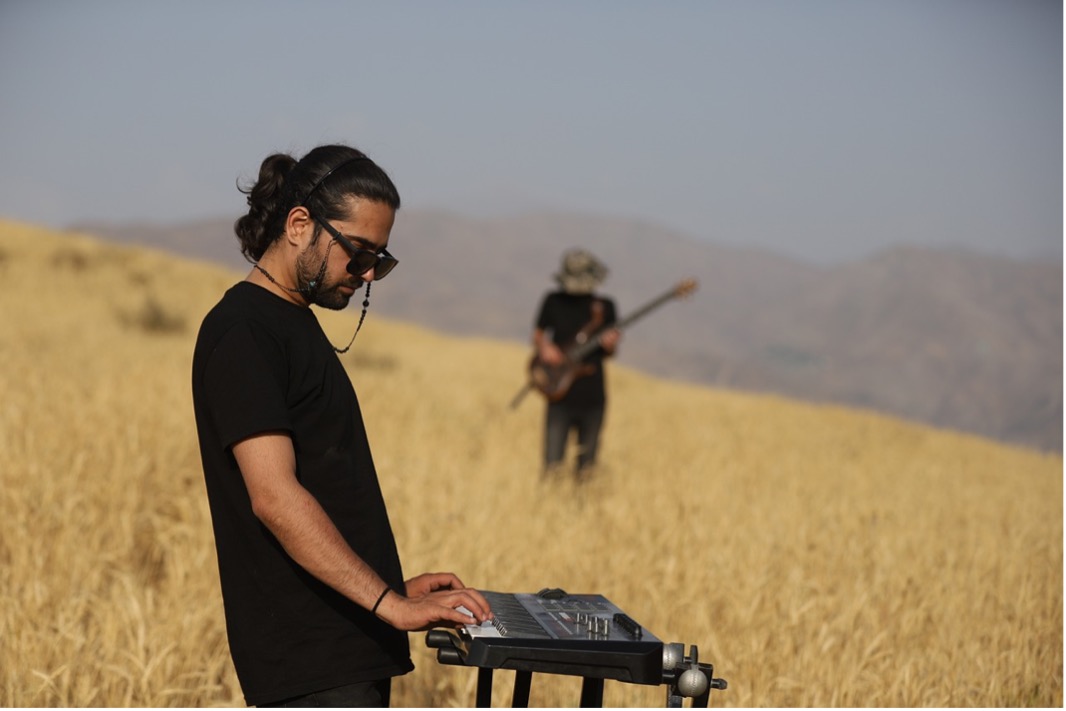
A promotional shot of the band, Mortaz. Photo by Mostafa Meraji, made available for use by Pixabay.

The iconic bass line of The White Stripe’s “Seven Nation Army” perforates the street noises of Tehran, the beat punctuated by car horns and the clapping of observers. A young woman, her scarf limp around her shoulders, nods at her bandmates as they silence their instruments to allow for her solo riff. A crowd of people of all ages surrounds the full drum kit and microphone set-up of the performers. The closest observers, shielded from street view by those behind them, bounce along to the beat, some more reservedly than others. The further rows of people are almost entirely still. Two older women, wearing the hijab, are also at the front of the crowd, but they do not dance or even hold eye contact with the band. Several young women move to the rhythm, unveiled, watching the female bassist intently. Multiple generations of Iranians are captured in the short, twenty second bit of vertical cell phone footage, the video going viral on social media for capturing one of the moments in the recent surge in street rock concerts.

In Bahman Ghobadi’s 2009 film No One Knows About Persian Cats, he chronicles the culture of underground rock in Iran’s capital city. The film follows two young musicians, Ashkan and Negar, as they attempt to build a band to perform in London while they wait for their visas to be manufactured by smugglers. The two travel around Tehran, meeting with several music groups across multiple genres in order to recruit talent. Ghobadi used real musicians from the city for his film, the two main actors being in reality a part of the indie rock band Take It Easy Hospital. In the film, Tehran’s music scene is depicted as entirely secretive and underground, sometimes literally: the bands’ meeting spaces range from basements, to rural cattle barns, to rooftop sheds, to construction sites. As they weave through the city, meeting dead end after dead end when it comes to travel permits and those willing to join their band, the central reality that Ashkan and Negar come to terms with is that to make music freely means to leave Tehran.

Ghobadi’s desire to document indie music projects in Tehran was in part inspired by the infamous Karaj rock show incident of August 2007, in which 230 musicians and concert goers were arrested for attending an illegal concert. Thirty minutes outside of Tehran, two young bands organized and hosted an open-air concert at a garden wedding venue. Originally expecting just 150 attendees, the event’s capacity for secrecy was foiled by the nearly 600 people who gathered there throughout the night. Hundreds of young people were arrested and jailed, as well as thousands of dollars’ worth of recording equipment, bootleg CDs, and musical instruments seized. The scale of the event and the following investigations led the government to discover the extent of the underground music culture in Tehran, triggering a crackdown on illegal recording studios and unlicensed concerts. Music groups in Iran are only allowed to perform with a license from the Ministry of Culture, and their official approval is almost impossible to receive. Licenses will not be granted to groups with female lead singers, bands with political lyrics, or performers who are deemed to perform Western music. Even if a group is legally granted permission to perform publicly, dancing at the event is not permitted, the hijab is mandatory, and concerts with mixed-gendered audiences are heavily monitored.

In the past year, with a notable uptick after the 2025 Twelve-day war with Israel, public music performances on the streets of Tehran have become a form of highly visible, cultural protest. Young people in the music scene are resisting the censorship of the government and the strict guidelines for performance by taking to street corners and shop fronts to engage in art loudly. Videos of female singers without the hijab, singing on public transport and in the streets have garnered millions of views and waves of support for their protest. These young people and their projects mostly go unnamed in these videos, with little to no social media presence for safety reasons; simply being visible is more practical than making a name in “the industry” for themselves at this time. The indie-rock community in Tehran works together to procure and offer their own spaces where people can gather and listen to live music, balancing the necessary secrecy with the goal of accessibility of music in Iran. The strong underground rock scene taking steps into the public eye is a direct affront to the expectations and mandates of the regime. Perhaps Negar and Ashkan’s belief that to be musicians means to leave their homeland is being proven wrong by the next generation of rock groups.


BIRDIE GILE is the Editorial Assistant at MizanProject.


Underground Rhythms

The Music Scene in Tehran

The iconic bass line of The White Stripe’s “Seven Nation Army” perforates the street noises of Tehran, the beat punctuated by car horns and the clapping of observers. A young woman, her scarf limp around her shoulders, nods at her bandmates as they silence their instruments to allow for her solo riff. A crowd of people of all ages surrounds the full drum kit and microphone set-up of the performers. The closest observers, shielded from street view by those behind them, bounce along to the beat, some more reservedly than others. The further rows of people are almost entirely still. Two older women, wearing the hijab, are also at the front of the crowd, but they do not dance or even hold eye contact with the band. Several young women move to the rhythm, unveiled, watching the female bassist intently. Multiple generations of Iranians are captured in the short, twenty second bit of vertical cell phone footage, the video going viral on social media for capturing one of the moments in the recent surge in street rock concerts.

In Bahman Ghobadi’s 2009 film No One Knows About Persian Cats, he chronicles the culture of underground rock in Iran’s capital city. The film follows two young musicians, Ashkan and Negar, as they attempt to build a band to perform in London while they wait for their visas to be manufactured by smugglers. The two travel around Tehran, meeting with several music groups across multiple genres in order to recruit talent. Ghobadi used real musicians from the city for his film, the two main actors being in reality a part of the indie rock band Take It Easy Hospital. In the film, Tehran’s music scene is depicted as entirely secretive and underground, sometimes literally: the bands’ meeting spaces range from basements, to rural cattle barns, to rooftop sheds, to construction sites. As they weave through the city, meeting dead end after dead end when it comes to travel permits and those willing to join their band, the central reality that Ashkan and Negar come to terms with is that to make music freely means to leave Tehran.

Ghobadi’s desire to document indie music projects in Tehran was in part inspired by the infamous Karaj rock show incident of August 2007, in which 230 musicians and concert goers were arrested for attending an illegal concert. Thirty minutes outside of Tehran, two young bands organized and hosted an open-air concert at a garden wedding venue. Originally expecting just 150 attendees, the event’s capacity for secrecy was foiled by the nearly 600 people who gathered there throughout the night. Hundreds of young people were arrested and jailed, as well as thousands of dollars’ worth of recording equipment, bootleg CDs, and musical instruments seized. The scale of the event and the following investigations led the government to discover the extent of the underground music culture in Tehran, triggering a crackdown on illegal recording studios and unlicensed concerts. Music groups in Iran are only allowed to perform with a license from the Ministry of Culture, and their official approval is almost impossible to receive. Licenses will not be granted to groups with female lead singers, bands with political lyrics, or performers who are deemed to perform Western music. Even if a group is legally granted permission to perform publicly, dancing at the event is not permitted, the hijab is mandatory, and concerts with mixed-gendered audiences are heavily monitored.

In the past year, with a notable uptick after the 2025 Twelve-day war with Israel, public music performances on the streets of Tehran have become a form of highly visible, cultural protest. Young people in the music scene are resisting the censorship of the government and the strict guidelines for performance by taking to street corners and shop fronts to engage in art loudly. Videos of female singers without the hijab, singing on public transport and in the streets have garnered millions of views and waves of support for their protest. These young people and their projects mostly go unnamed in these videos, with little to no social media presence for safety reasons; simply being visible is more practical than making a name in “the industry” for themselves at this time. The indie-rock community in Tehran works together to procure and offer their own spaces where people can gather and listen to live music, balancing the necessary secrecy with the goal of accessibility of music in Iran. The strong underground rock scene taking steps into the public eye is a direct affront to the expectations and mandates of the regime. Perhaps Negar and Ashkan’s belief that to be musicians means to leave their homeland is being proven wrong by the next generation of rock groups.


BIRDIE GILE is the Editorial Assistant at MizanProject.

Underground Rhythms

The Music Scene in Tehran

Underground Rhythms

The Music Scene in Tehran