


PDF
Download
Citations
Click and drag then release to select a passage to cite.
Annotations
How to submit annotations to Mizan Journal articles:
your work is published.
Search within
Hope in Hopelessness: Love Unrequited in Different Climes
Editor’s Introduction
Image
Audio
Video
Chart or Graph
Hope in Hopelessness: Love Unrequited in Different Climes
Editor’s Introduction
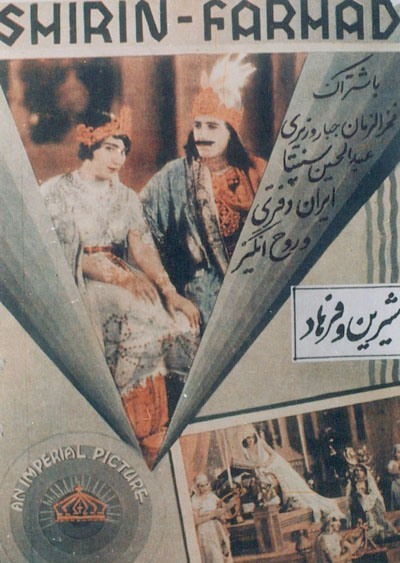
Poster from Shirin and Farhad (Persian: شیرین و فرهاد), a 1934 Iranian romance film directed by Abdolhossein Sepanta and produced by Ardeshir Irani’s Imperial Films of Bombay. Image via Wikimedia Commons.
Love unrequited is a perennial theme in literature from across the world and throughout history. As ipso facto unfulfilled, it is open to a wide swath of interpretations, from divine to heterodox love, extending even to political aspirations that defy prevailing regimes of power and authority. Unrequited love draws on the multivalent rhetoric of desire, as argued by the papers in the current volume of MIZAN.
The focus in Domenico Ingenito’s “Erotic Reversibility and Suspension of Subjective Desire in Rāmin’s Lyric Songs,” is on the often interchangeable roles of desiring subjects and desired objects that characterize the narrative in Persian poetry, in this case Fakhr al-Dīn Gorgānī’s eleventh century Vis-o Rāmin, a long narrative poem that depicts the complex psychological and socio-political challenges faced by a number of characters who are fated to experience the unfulfillable nature of their desires. King Mobad of Marv desires Queen Shahru of Media, who deflects his libidinal attentions and promises him the hand of her yet-to-be born daughter, Vis. A mysterious wet-nurse, who serves as the primary catalyst for desire’s transformative forces throughout the book, raises both Princess Vis and King Mobad’s young brother, Rāmin, at Queen Shahru’s court. Years later, Vis marries her own brother, Viru, despite the old covenant. In the meantime, King Mobad kidnaps Vis and forces her to marry him. During the abduction, Rāmin catches glimpses of Vis’s beauty and falls desperately in love with her. With the rhetorical and sexual intercession of the Nurse, Vis ends up reciprocating Rāmin’s love, while struggling to free herself from Mobad’s impotent but coercive nuptial captivity and the lingering but faded thought of her brother and legitimate husband, Viru.
This paper scrutinizes Rāmin’s lyric passages in the theoretical context of recent paradigms that conceive of lyric poems as non-mimetic and non-fictional texts (as opposed to confessional poems and narrative fiction) that require to be performed to enact subjectivity.
Unrequited love as a cypher for transcendent love, refracted rhetorically in the poetry of Neẓāmi Ganjavi in the twelfth century is the subject of Olga Davidson’s paper “A Rhetoric for Unrequited love in Neẓāmi’s Khosrow and Shirin.” Nezāmi’s Khosrow and Shirin dramatizes an interaction of two different kinds of poetics and two different kinds of rhetoric, each conveying their own codes and conventions. In the present study, the focus of interest shifts from two kinds of poetics to two kinds of rhetoric, exemplified by a set of questions and answers attributed to two rival lovers of Shirin, namely, Khosrow the king and Farhād the artisan. These lovers are represented as engaging in a verbal duel that contrasts the values of the poetic genre of classical Persian romance with the values of a world view that is conventionally known as Sufism.
The interaction of the lines spoken by Khosrow and Farhād in this Persian equivalent of “stichomythia” reveals two different models of a theme conventionally known as unrequited love. In this case, the rival lovers of a woman who figures as their love-object experience the non-requital in different ways. Whereas the king fears non-requital of his love for Shirin because he fears that the love of the artisan for this woman will indeed be requited, the artisan willingly accepts non-requital of his own love for Shirin because he somehow knows that this love of his must be transcendent: he must love being in love. Thus, his love for Shirin must be unrequited, which transcends all other kinds of love. Such a transcendent rhetoric of unrequited love, it is argued, matches the transcendence of love poetry as loved by Nezāmi the poet.
It is explored as an occasion for genderbending roleplay in Qajar era poetry in “When Khusraw is Shirin, and Shirin can Become Farhād: Gendered Roleplay in Early Qajar Poetry” by Dominic Brookshaw, which scrutinizes narratives by an early nineteenth century governor of Iranian Kurdistan and two of his wives, all of whom draw on the tale of a Sasanian king and his wife and her unrequited lover as narrated by Neẓāmi Ganjavi to varied political ends. In their ghazals, they all employ romantic talmih to masterful effect. A key rhetorical device in the Persian ghazal from at least the thirteenth century CE, talmiḥ is a brief, deliberate, tacit allusion to a historical person or character from the mythological, literary, or religious past that is used to elucidate truths in the present. Derived from an Arabic root that suggests gazing briefly or surreptitiously, talmih allows the poet to point with concision to popular narratives without listing the full details of a given episode from the historical or fictional past. By drawing on a communal understanding of the story of the Sasanian king, Khusraw II, his Christian wife, Shirin, and her would-be lover, Farhād, these three Qajar poets reconfigure tales told by Neẓāmi to make sense of the political complexities and interpersonal tensions of their collective present.
Hope in Hopelessness: Love Unrequited in Different Climes
Editor’s Introduction
Poster from Shirin and Farhad (Persian: شیرین و فرهاد), a 1934 Iranian romance film directed by Abdolhossein Sepanta and produced by Ardeshir Irani’s Imperial Films of Bombay. Image via Wikimedia Commons.
Love unrequited is a perennial theme in literature from across the world and throughout history. As ipso facto unfulfilled, it is open to a wide swath of interpretations, from divine to heterodox love, extending even to political aspirations that defy prevailing regimes of power and authority. Unrequited love draws on the multivalent rhetoric of desire, as argued by the papers in the current volume of MIZAN.
The focus in Domenico Ingenito’s “Erotic Reversibility and Suspension of Subjective Desire in Rāmin’s Lyric Songs,” is on the often interchangeable roles of desiring subjects and desired objects that characterize the narrative in Persian poetry, in this case Fakhr al-Dīn Gorgānī’s eleventh century Vis-o Rāmin, a long narrative poem that depicts the complex psychological and socio-political challenges faced by a number of characters who are fated to experience the unfulfillable nature of their desires. King Mobad of Marv desires Queen Shahru of Media, who deflects his libidinal attentions and promises him the hand of her yet-to-be born daughter, Vis. A mysterious wet-nurse, who serves as the primary catalyst for desire’s transformative forces throughout the book, raises both Princess Vis and King Mobad’s young brother, Rāmin, at Queen Shahru’s court. Years later, Vis marries her own brother, Viru, despite the old covenant. In the meantime, King Mobad kidnaps Vis and forces her to marry him. During the abduction, Rāmin catches glimpses of Vis’s beauty and falls desperately in love with her. With the rhetorical and sexual intercession of the Nurse, Vis ends up reciprocating Rāmin’s love, while struggling to free herself from Mobad’s impotent but coercive nuptial captivity and the lingering but faded thought of her brother and legitimate husband, Viru.
This paper scrutinizes Rāmin’s lyric passages in the theoretical context of recent paradigms that conceive of lyric poems as non-mimetic and non-fictional texts (as opposed to confessional poems and narrative fiction) that require to be performed to enact subjectivity.
Unrequited love as a cypher for transcendent love, refracted rhetorically in the poetry of Neẓāmi Ganjavi in the twelfth century is the subject of Olga Davidson’s paper “A Rhetoric for Unrequited love in Neẓāmi’s Khosrow and Shirin.” Nezāmi’s Khosrow and Shirin dramatizes an interaction of two different kinds of poetics and two different kinds of rhetoric, each conveying their own codes and conventions. In the present study, the focus of interest shifts from two kinds of poetics to two kinds of rhetoric, exemplified by a set of questions and answers attributed to two rival lovers of Shirin, namely, Khosrow the king and Farhād the artisan. These lovers are represented as engaging in a verbal duel that contrasts the values of the poetic genre of classical Persian romance with the values of a world view that is conventionally known as Sufism.
The interaction of the lines spoken by Khosrow and Farhād in this Persian equivalent of “stichomythia” reveals two different models of a theme conventionally known as unrequited love. In this case, the rival lovers of a woman who figures as their love-object experience the non-requital in different ways. Whereas the king fears non-requital of his love for Shirin because he fears that the love of the artisan for this woman will indeed be requited, the artisan willingly accepts non-requital of his own love for Shirin because he somehow knows that this love of his must be transcendent: he must love being in love. Thus, his love for Shirin must be unrequited, which transcends all other kinds of love. Such a transcendent rhetoric of unrequited love, it is argued, matches the transcendence of love poetry as loved by Nezāmi the poet.
It is explored as an occasion for genderbending roleplay in Qajar era poetry in “When Khusraw is Shirin, and Shirin can Become Farhād: Gendered Roleplay in Early Qajar Poetry” by Dominic Brookshaw, which scrutinizes narratives by an early nineteenth century governor of Iranian Kurdistan and two of his wives, all of whom draw on the tale of a Sasanian king and his wife and her unrequited lover as narrated by Neẓāmi Ganjavi to varied political ends. In their ghazals, they all employ romantic talmih to masterful effect. A key rhetorical device in the Persian ghazal from at least the thirteenth century CE, talmiḥ is a brief, deliberate, tacit allusion to a historical person or character from the mythological, literary, or religious past that is used to elucidate truths in the present. Derived from an Arabic root that suggests gazing briefly or surreptitiously, talmih allows the poet to point with concision to popular narratives without listing the full details of a given episode from the historical or fictional past. By drawing on a communal understanding of the story of the Sasanian king, Khusraw II, his Christian wife, Shirin, and her would-be lover, Farhād, these three Qajar poets reconfigure tales told by Neẓāmi to make sense of the political complexities and interpersonal tensions of their collective present.
Hope in Hopelessness: Love Unrequited in Different Climes
Editor’s Introduction
Poster from Shirin and Farhad (Persian: شیرین و فرهاد), a 1934 Iranian romance film directed by Abdolhossein Sepanta and produced by Ardeshir Irani’s Imperial Films of Bombay. Image via Wikimedia Commons.
Love unrequited is a perennial theme in literature from across the world and throughout history. As ipso facto unfulfilled, it is open to a wide swath of interpretations, from divine to heterodox love, extending even to political aspirations that defy prevailing regimes of power and authority. Unrequited love draws on the multivalent rhetoric of desire, as argued by the papers in the current volume of MIZAN.
The focus in Domenico Ingenito’s “Erotic Reversibility and Suspension of Subjective Desire in Rāmin’s Lyric Songs,” is on the often interchangeable roles of desiring subjects and desired objects that characterize the narrative in Persian poetry, in this case Fakhr al-Dīn Gorgānī’s eleventh century Vis-o Rāmin, a long narrative poem that depicts the complex psychological and socio-political challenges faced by a number of characters who are fated to experience the unfulfillable nature of their desires. King Mobad of Marv desires Queen Shahru of Media, who deflects his libidinal attentions and promises him the hand of her yet-to-be born daughter, Vis. A mysterious wet-nurse, who serves as the primary catalyst for desire’s transformative forces throughout the book, raises both Princess Vis and King Mobad’s young brother, Rāmin, at Queen Shahru’s court. Years later, Vis marries her own brother, Viru, despite the old covenant. In the meantime, King Mobad kidnaps Vis and forces her to marry him. During the abduction, Rāmin catches glimpses of Vis’s beauty and falls desperately in love with her. With the rhetorical and sexual intercession of the Nurse, Vis ends up reciprocating Rāmin’s love, while struggling to free herself from Mobad’s impotent but coercive nuptial captivity and the lingering but faded thought of her brother and legitimate husband, Viru.
This paper scrutinizes Rāmin’s lyric passages in the theoretical context of recent paradigms that conceive of lyric poems as non-mimetic and non-fictional texts (as opposed to confessional poems and narrative fiction) that require to be performed to enact subjectivity.
Unrequited love as a cypher for transcendent love, refracted rhetorically in the poetry of Neẓāmi Ganjavi in the twelfth century is the subject of Olga Davidson’s paper “A Rhetoric for Unrequited love in Neẓāmi’s Khosrow and Shirin.” Nezāmi’s Khosrow and Shirin dramatizes an interaction of two different kinds of poetics and two different kinds of rhetoric, each conveying their own codes and conventions. In the present study, the focus of interest shifts from two kinds of poetics to two kinds of rhetoric, exemplified by a set of questions and answers attributed to two rival lovers of Shirin, namely, Khosrow the king and Farhād the artisan. These lovers are represented as engaging in a verbal duel that contrasts the values of the poetic genre of classical Persian romance with the values of a world view that is conventionally known as Sufism.
The interaction of the lines spoken by Khosrow and Farhād in this Persian equivalent of “stichomythia” reveals two different models of a theme conventionally known as unrequited love. In this case, the rival lovers of a woman who figures as their love-object experience the non-requital in different ways. Whereas the king fears non-requital of his love for Shirin because he fears that the love of the artisan for this woman will indeed be requited, the artisan willingly accepts non-requital of his own love for Shirin because he somehow knows that this love of his must be transcendent: he must love being in love. Thus, his love for Shirin must be unrequited, which transcends all other kinds of love. Such a transcendent rhetoric of unrequited love, it is argued, matches the transcendence of love poetry as loved by Nezāmi the poet.
It is explored as an occasion for genderbending roleplay in Qajar era poetry in “When Khusraw is Shirin, and Shirin can Become Farhād: Gendered Roleplay in Early Qajar Poetry” by Dominic Brookshaw, which scrutinizes narratives by an early nineteenth century governor of Iranian Kurdistan and two of his wives, all of whom draw on the tale of a Sasanian king and his wife and her unrequited lover as narrated by Neẓāmi Ganjavi to varied political ends. In their ghazals, they all employ romantic talmih to masterful effect. A key rhetorical device in the Persian ghazal from at least the thirteenth century CE, talmiḥ is a brief, deliberate, tacit allusion to a historical person or character from the mythological, literary, or religious past that is used to elucidate truths in the present. Derived from an Arabic root that suggests gazing briefly or surreptitiously, talmih allows the poet to point with concision to popular narratives without listing the full details of a given episode from the historical or fictional past. By drawing on a communal understanding of the story of the Sasanian king, Khusraw II, his Christian wife, Shirin, and her would-be lover, Farhād, these three Qajar poets reconfigure tales told by Neẓāmi to make sense of the political complexities and interpersonal tensions of their collective present.
Hope in Hopelessness: Love Unrequited in Different Climes
Editor’s Introduction
Poster from Shirin and Farhad (Persian: شیرین و فرهاد), a 1934 Iranian romance film directed by Abdolhossein Sepanta and produced by Ardeshir Irani’s Imperial Films of Bombay. Image via Wikimedia Commons.
Love unrequited is a perennial theme in literature from across the world and throughout history. As ipso facto unfulfilled, it is open to a wide swath of interpretations, from divine to heterodox love, extending even to political aspirations that defy prevailing regimes of power and authority. Unrequited love draws on the multivalent rhetoric of desire, as argued by the papers in the current volume of MIZAN.
The focus in Domenico Ingenito’s “Erotic Reversibility and Suspension of Subjective Desire in Rāmin’s Lyric Songs,” is on the often interchangeable roles of desiring subjects and desired objects that characterize the narrative in Persian poetry, in this case Fakhr al-Dīn Gorgānī’s eleventh century Vis-o Rāmin, a long narrative poem that depicts the complex psychological and socio-political challenges faced by a number of characters who are fated to experience the unfulfillable nature of their desires. King Mobad of Marv desires Queen Shahru of Media, who deflects his libidinal attentions and promises him the hand of her yet-to-be born daughter, Vis. A mysterious wet-nurse, who serves as the primary catalyst for desire’s transformative forces throughout the book, raises both Princess Vis and King Mobad’s young brother, Rāmin, at Queen Shahru’s court. Years later, Vis marries her own brother, Viru, despite the old covenant. In the meantime, King Mobad kidnaps Vis and forces her to marry him. During the abduction, Rāmin catches glimpses of Vis’s beauty and falls desperately in love with her. With the rhetorical and sexual intercession of the Nurse, Vis ends up reciprocating Rāmin’s love, while struggling to free herself from Mobad’s impotent but coercive nuptial captivity and the lingering but faded thought of her brother and legitimate husband, Viru.
This paper scrutinizes Rāmin’s lyric passages in the theoretical context of recent paradigms that conceive of lyric poems as non-mimetic and non-fictional texts (as opposed to confessional poems and narrative fiction) that require to be performed to enact subjectivity.
Unrequited love as a cypher for transcendent love, refracted rhetorically in the poetry of Neẓāmi Ganjavi in the twelfth century is the subject of Olga Davidson’s paper “A Rhetoric for Unrequited love in Neẓāmi’s Khosrow and Shirin.” Nezāmi’s Khosrow and Shirin dramatizes an interaction of two different kinds of poetics and two different kinds of rhetoric, each conveying their own codes and conventions. In the present study, the focus of interest shifts from two kinds of poetics to two kinds of rhetoric, exemplified by a set of questions and answers attributed to two rival lovers of Shirin, namely, Khosrow the king and Farhād the artisan. These lovers are represented as engaging in a verbal duel that contrasts the values of the poetic genre of classical Persian romance with the values of a world view that is conventionally known as Sufism.
The interaction of the lines spoken by Khosrow and Farhād in this Persian equivalent of “stichomythia” reveals two different models of a theme conventionally known as unrequited love. In this case, the rival lovers of a woman who figures as their love-object experience the non-requital in different ways. Whereas the king fears non-requital of his love for Shirin because he fears that the love of the artisan for this woman will indeed be requited, the artisan willingly accepts non-requital of his own love for Shirin because he somehow knows that this love of his must be transcendent: he must love being in love. Thus, his love for Shirin must be unrequited, which transcends all other kinds of love. Such a transcendent rhetoric of unrequited love, it is argued, matches the transcendence of love poetry as loved by Nezāmi the poet.
It is explored as an occasion for genderbending roleplay in Qajar era poetry in “When Khusraw is Shirin, and Shirin can Become Farhād: Gendered Roleplay in Early Qajar Poetry” by Dominic Brookshaw, which scrutinizes narratives by an early nineteenth century governor of Iranian Kurdistan and two of his wives, all of whom draw on the tale of a Sasanian king and his wife and her unrequited lover as narrated by Neẓāmi Ganjavi to varied political ends. In their ghazals, they all employ romantic talmih to masterful effect. A key rhetorical device in the Persian ghazal from at least the thirteenth century CE, talmiḥ is a brief, deliberate, tacit allusion to a historical person or character from the mythological, literary, or religious past that is used to elucidate truths in the present. Derived from an Arabic root that suggests gazing briefly or surreptitiously, talmih allows the poet to point with concision to popular narratives without listing the full details of a given episode from the historical or fictional past. By drawing on a communal understanding of the story of the Sasanian king, Khusraw II, his Christian wife, Shirin, and her would-be lover, Farhād, these three Qajar poets reconfigure tales told by Neẓāmi to make sense of the political complexities and interpersonal tensions of their collective present.